Scientific Program > Round Table
ISG-SECEC Joint Round Table
June 03, 2026, 11:00 to 12:45 AM (CEST, UTC+2)
Advanced Planning in Reverse Total Shoulder Arthroplasty:
A Multidisciplinary Path to Personalization and Improved Prediction
Cross-disciplinary perspectives from two orthopaedic surgeons
and two biomechanists on shoulder arthroplasty
The round table will be co-chaired by Dr. Lionel Neyton (Lyon, France) and Dr. Nicolas Holzer (Geneva, Switzerland). It will be held both in person and via videoconference. Participants attending remotely are kindly requested to register here in order to receive the videoconference link a few days prior to the conference.
Session overview:
Over the past decade, preoperative planning in shoulder arthroplasty has undergone significant advances, driven by imaging technologies, computational modeling, and data-driven approaches. While these innovations have enhanced our ability to assess patient specific anatomy and guide implant positioning, a critical unmet need remains: the reliable prediction of patient-specific functional outcomes. Despite increasingly sophisticated tools, translating preoperative plans into reliable postoperative range of motion prediction continues to challenge clinicians and researchers alike. A central limitation lies in the traditional focus of planning strategies, which largely remain confined to the glenohumeral joint. This historical approach overlooks the complex interplay between the scapulothoracic articulation and the broader thoraco-gravitational system, both of which are essential determinants of shoulder function. As highlighted by recent work, including discussions within this conference, important gaps persist in how the whole shoulder girdle kinematics and dynamics are integrated into planning frameworks. Addressing these limitations requires a paradigm shift: a necessary “de-zooming” from a joint-centered perspective toward a holistic understanding of the patient. Shoulder function cannot be fully understood in isolation but must be considered within the context of whole-body kinematics, posture, and neuromuscular coordination. Incorporating these dimensions into planning tools represents a key step toward truly personalized and predictive solutions. In this context, the objective of this round table is to foster a genuinely interdisciplinary dialogue, bringing together orthopedic surgeons, biomechanical engineers, and data scientists. By combining clinical insight with advances in modeling, imaging, and motion analysis, we aim to identify new pathways for improving surgical planning, enhancing outcome prediction, and ultimately delivering better care.
Speakers:
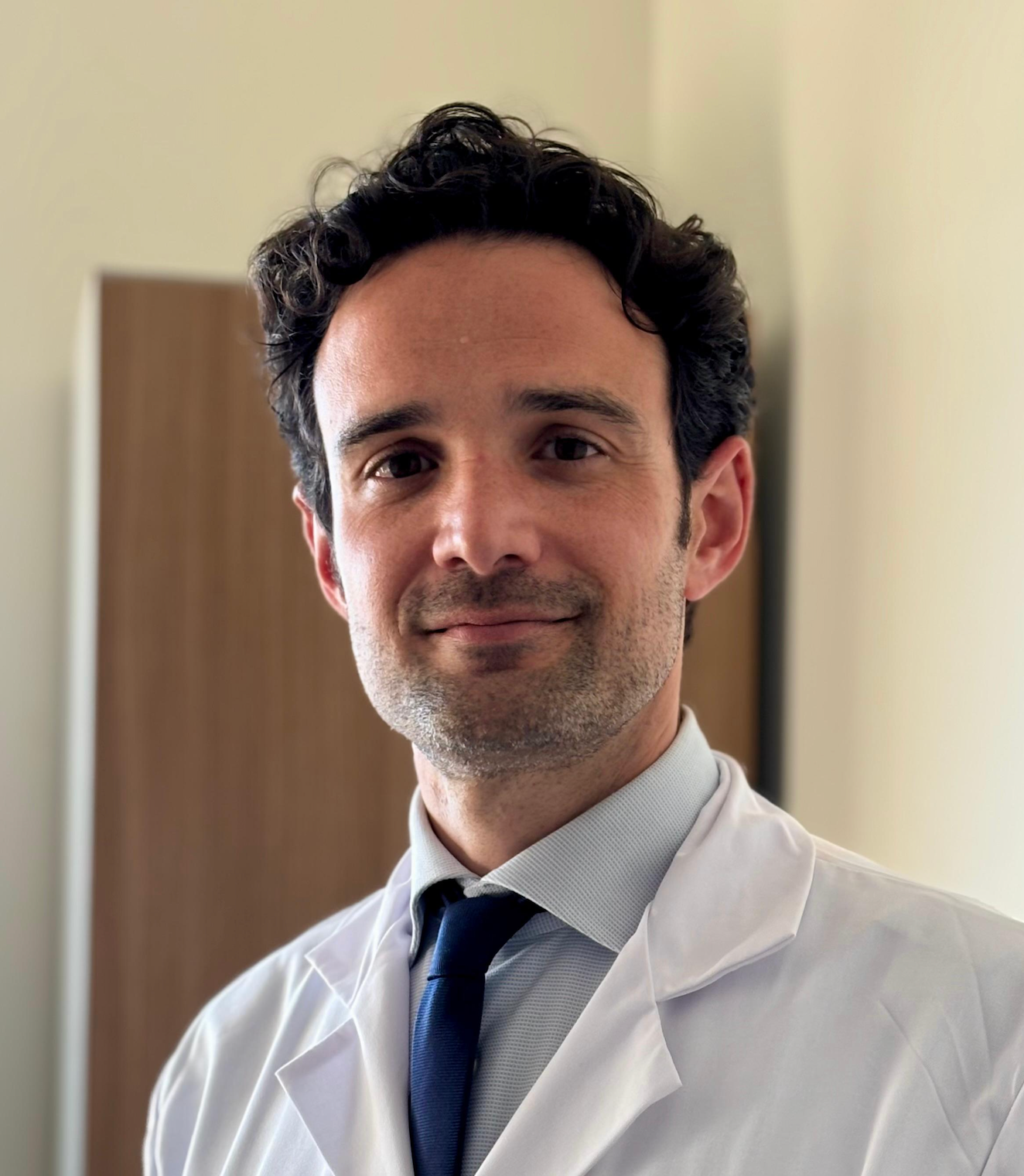 |
Pr Marc Olivier Gauci
Professor Gauci is an orthopaedic surgeon at Nice University Hospital, where he heads the Shoulder Surgery Unit. He founded a research group in 2017 that has been Inserm certified since 2023, and he serves as Director of the regional PACA Health Data Warehouse. His translational research centers on digital musculoskeletal models and augmented, data driven applications for the operating room. He is President of CAOS France (Computer Assisted Orthopaedic Surgery), Scientific Director of SOFEC, and a member of the SECEC programme committee, and he advises AIS on “surgery of the future.” He has authored roughly 100 peer reviewed publications (h index 27; ~3,000 citations). His work has been recognised by several awards, including the National Academy of Surgery Award (2017) and the Paul Grammont Award (2025).
|
|
What are the key parameters of the surgery planning to optimize shoulder mobility and stability in reverse total shoulder arthroplasty?
Over the past decade, preoperative planning for shoulder arthroplasty and its intraoperative applications have become widely adopted. This has improved our understanding of normal and pathological shoulder anatomy, enabled the development of statistical shape models, and facilitated automated quantification of glenohumeral morphometrics. It has also exposed persistent gaps in how we model the scapulothoracic joint and shoulder posture, particularly at the time of imaging acquisition. Diagnosis and implant selection are now better justified and increasingly “augmented” by AI algorithms that guide surgical decision-making. In parallel, the final positioning and muscle tension achieved during reverse shoulder arthroplasty depend on multiple, imperfectly controlled factors—notably surgeon experience and implant design. At present, no objective standard defines the optimal degree of humeral lateralization and distalization relative to the glenoid. Several complementary avenues are being pursued, including standardizing metrics for implant lateralization and distalization, biomechanical modeling of the deltoid and rotator cuff, and the development of connected implants capable of recording real-time intra-articular pressure during implantation.
|
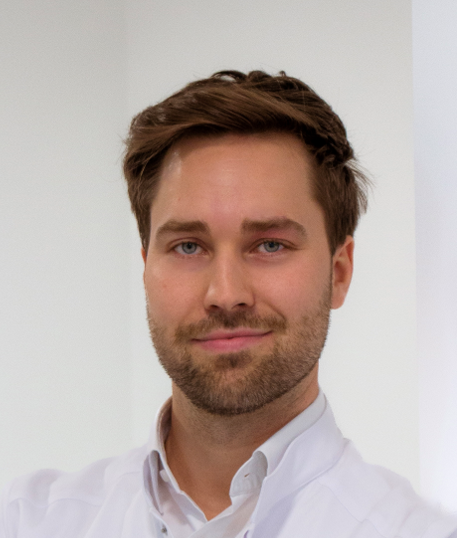 |
Dr. Paul Siegert
Dr. Siegert is an orthopedic surgeon specializing in shoulder surgery and serves as an attending physician at the Orthopedic Hospital Speising in Vienna. He completed fellowships at the Charité in Berlin and the Schulthess Clinic in Zurich, working alongside Prof. Moroder. His scientific and clinical focus lies in optimizing outcomes in reverse total shoulder arthroplasty, with particular interest in improving implant performance, biomechanics, and long-term function.
|
|
What is the impact of the patient’s morphological features on range of motion in reverse total shoulder arthroplasty?
Patient-specific morphology plays a crucial yet incompletely understood role in functional outcomes after reverse total shoulder arthroplasty (RTSA). This presentation explores how individual anatomical parameters—particularly scapulothoracic orientation—may influence predicted postoperative range of motion. By challenging conventional assumptions in preoperative planning, we examine whether traditional simulation models truly reflect real functional motion. The talk highlights the importance of integrating global anatomical alignment into surgical planning to better understand patient-specific motion potential and to refine future strategies for optimized implant positioning in RTSA.
|
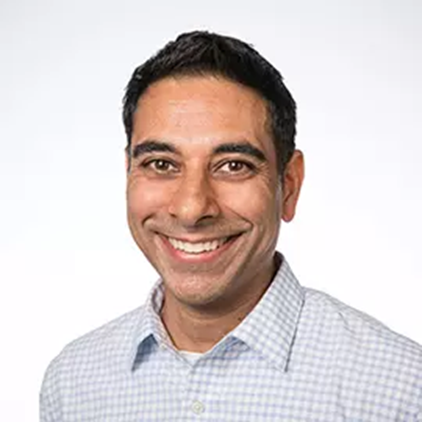 |
Dr. Ajay Seth
Dr Seth is an associate professor of Biomechanical Engineering at the Delft University of Technology (TU Delft), where he leads the Computational Biomechanics Lab. The lab's mission is to develop computational models and algorithms that enable the acquisition, analysis and prediction of human and animal movement. He is interested in methods that quantify and explain the biological basis of human movement from the pathological (injury and stroke) to the exceptional (athlete performance). Before joining TU Delft, he was the architect of the modeling and simulation software, OpenSim, at Stanford University where he completed a Simbios distinguished postdoctoral fellowship in Bioengineering. Ajay received his PhD from the University of Texas at Austin in Biomedical engineering and predoctoral degrees in Systems Design Engineering from the University of Waterloo, Canada.
|
|
How can musculoskeletal modeling enhance the prediction of postoperative scapula and glenohumeral kinematics?
Physics-, anatomy- and physiology-based musculoskeletal models are more than descriptive—they are inherently predictive, but that potential has remained relatively untapped in the study of upper-extremity movement. Particularly in shoulder modeling, the focus has been on an accurate representation of scapula kinematics, scapulohumeral rhythm and accounting for rotator-cuff muscle contributions to movement and stability. These descriptive studies increase our confidence in the mechanics embodied by musculoskeletal models. The challenge is to predict how the shoulder will move and ask, “what if?” questions related to morphological changes due to surgery and joint implants. In this round table, we will discuss the state-of-the-art of upper-extremity models and prediction tools to direct surgical planning and implant design.
|
 |
Dr. Aziliz Guezou-Philippe
Dr Guezou-Philippe is an Assistant Professor in the Data Science Department at IMT Atlantique and a researcher within LaTIM (INSERM UMR 1101) in Brest, France. Her work focuses on medical image analysis, statistical shape and density modelling, and machine-learning methods for patient-specific orthopaedic planning, with a particular interest in characterising bone morphology and biomechanics to support personalised surgical decision-making. She has contributed to advances in automated imaging pipelines for implant design and in ultrasound-based functional assessment of joint motion. Dr Guezou-Philippe collaborates closely with clinical and international partners, and her research sits at the interface of computer vision, biomechanics, and musculoskeletal health.
|
|
How can imaging and motion capture techniques be used to incorporate patient morphological features?
Reverse total shoulder arthroplasty (RTSA) is widely used to treat shoulder osteoarthritis, complex proximal humerus fractures, and massive rotator cuff tears, yet complication rates remain above 20%, often due to instability or fractures. Current planning workflows rely mainly on bone morphology extracted from supine CT scans and overlook patient-specific mechanical properties and functional behaviour, both of which strongly influence implant orientation and post-operative mobility. PeRSAPlan addresses this gap by developing a more comprehensive and patient-specific approach to characterising shoulder anatomy, mechanics, and function, with the aim of supporting more reliable implant planning and ultimately improving clinical outcomes.
|
|